Chain Only or Pendant Necklace? Which Works Better With Early-Autumn Layers?
A silver chain that looked just right with a T-shirt in August can feel completely different once early-autumn layers come out. Add an overshirt, knit polo or light jacket, and the necklace may become partly hidden, crowded by a collar or more noticeable than you intended.
This is where many men wonder whether to keep things simple with a chain alone or add a pendant. A plain men’s silver chain brings a clean line and a little contrast to layered clothing. A pendant necklace draws more attention to the center of the chest, which can work well when the surrounding outfit is simple. But when collars, buttons, patterns and textured fabrics are already competing for space, the pendant may make the neckline feel too busy.
There is no single option that works with every early-autumn outfit. The better choice depends on the neckline, the number of layers and how much open space is left around the chest. Looking at those details first makes the decision much easier.
What Changes When Early-Autumn Layers Are Added?
During summer, a plain T-shirt gives a necklace a wide, uninterrupted background. Whether you wear a chain alone or add a pendant, the full shape is easy to see. Early-autumn clothing changes that background.
An overshirt introduces two vertical edges, a collar and a row of buttons. A knit polo adds a collar and placket directly beside the necklace. Cardigans, quarter-zips and lightweight jackets create their own lines around the upper chest. Patterns and heavier textures bring even more visual detail. The necklace now has to share a relatively small area with several other elements.
A plain silver chain is often easier to work into this setting because it adds shine and definition without creating another strong shape. It may appear only at the back of the neck or within the opening of a shirt, but that small amount of silver can still look intentional.
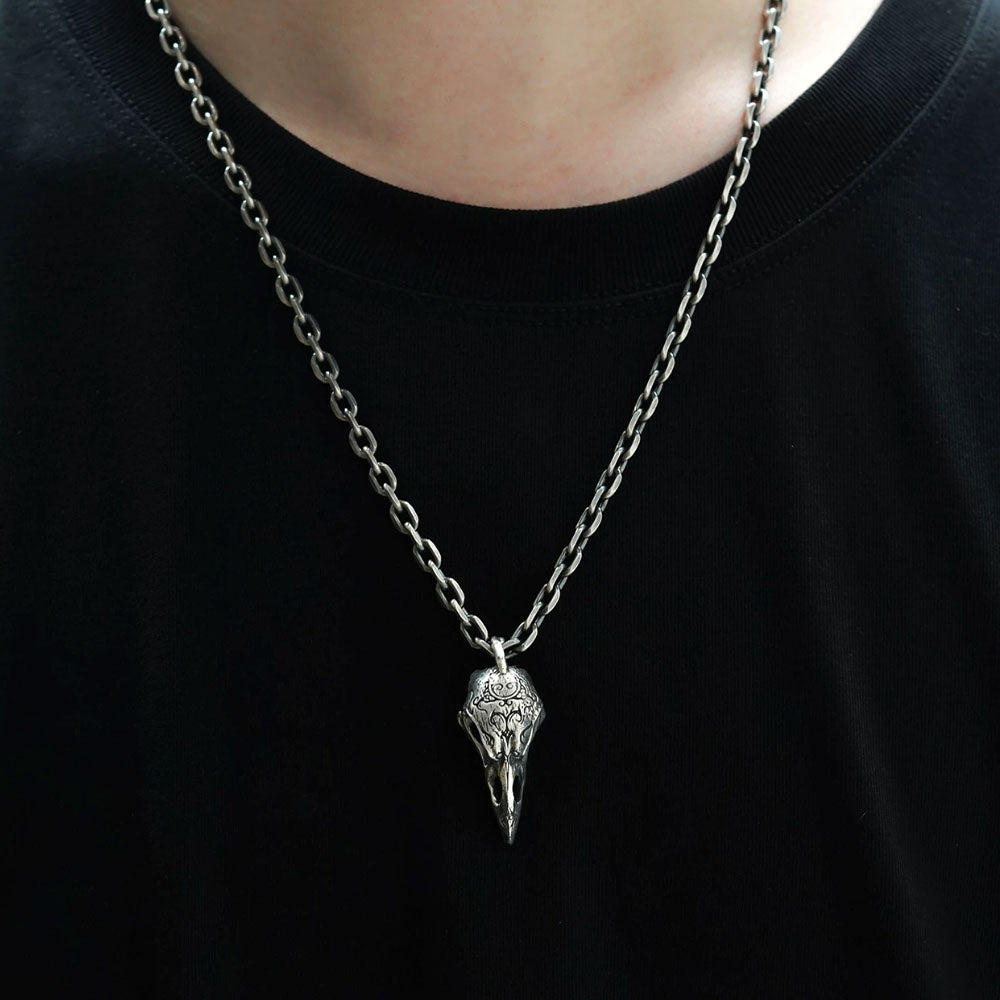
A pendant necklace plays a different role. It pulls the eye toward one point in the center of the chest. That can improve an outfit when the shirt and outer layer are simple, but it can also make a busy neckline feel crowded. A pendant sitting between a collar, buttons and a jacket opening may look as though it has nowhere to settle.
A useful rule is to consider how much the clothing is already doing. The more pattern, texture and structure there is around the neckline, the less detail the necklace usually needs. When the layers leave a clean, open area at the chest, a pendant has more room to work.
When a Chain Alone Works Better
A chain alone is usually the safer choice when the clothing already creates several lines or points of interest around the neck. Knit polos are a good example. The collar, buttons and textured fabric provide enough detail, while a small amount of visible silver keeps the outfit from feeling too plain. Adding a pendant can crowd the narrow opening beneath the collar.
The same principle applies to quarter-zips. The zipper already runs down the center of the chest and acts as a focal point. A pendant hanging beside or directly above it often competes for attention. A plain chain can remain partly visible when the zipper is open and disappear neatly when it is closed.
Patterned flannel and checked overshirts also tend to work better with a chain alone. These shirts have strong colors, intersecting lines and visible buttons. The chain adds contrast without introducing another object into an already active area. With corduroy, denim or a chore jacket, a heavier or darker silver chain can support the more rugged texture of the clothing without making the outfit look overly decorated.
A chain without a pendant does not have to be thin or barely noticeable. Link shape, width and finish all affect its presence. A polished chain catches more light, while an oxidized finish sits more quietly beside deep autumn colors. Comparing the proportions of different men’s silver chains can help show how much visual weight a chain can add on its own.
For business-casual outfits, keeping the necklace simple is often the better move. A chain worn inside an open Oxford shirt or beneath a fine cardigan adds a personal detail without changing the character of the outfit. Only a short section may be visible, but that is often enough. With early-autumn layers, a chain does not need to be fully displayed to have an effect.
When a Pendant Necklace Works Better
A pendant works best when the clothing leaves a clear, open area at the center of the chest. A plain T-shirt beneath an unbuttoned overshirt is one of the easiest examples. The two sides of the overshirt form a natural frame, while the T-shirt provides a simple background. A pendant placed inside that frame gives the outfit a focal point without competing with the clothing.
An Oxford, denim or chambray shirt can create a similar effect when the top buttons are left open. In this case, the pendant should sit comfortably within the opening rather than touching the collar or disappearing beneath the buttoned section. If it repeatedly slips in and out of view, the necklace may be too long for that particular shirt.
A pendant necklace also works well with solid autumn colors. Cream, charcoal, navy, olive and dark brown give silver a strong background, especially when the shirt has little pattern or texture. A simple pendant can break up a large area of one color and make an otherwise basic combination feel more personal.
Lightweight jackets can provide the same kind of space. A clean bomber, suede jacket or unstructured jacket worn open creates two vertical lines leading toward the center of the chest. If the shirt underneath is plain, a pendant can complete that arrangement. With a patterned shirt, large zipper or several visible pockets, however, a chain alone may still be the better choice.
The pendant itself should suit the amount of space available. A small design can get lost inside a wide jacket opening, while a large or highly detailed pendant may overwhelm a narrow shirt opening. Ideally, it should be clearly visible rather than half-covered by a placket or collar.
Style is not the only consideration. Religious, cultural and sentimental pendants are often worn for reasons that matter more than perfect proportions. In those cases, the surrounding layers can be adjusted so the piece sits comfortably, whether it is displayed or kept beneath the shirt.
Let the Neckline Make the Decision
The easiest way to choose between a chain and a pendant is to put on the entire outfit first. A necklace that looks balanced with a shirt alone may feel crowded after you add an overshirt, cardigan or jacket.
Start by looking at the open space around the neck and upper chest. If that area already contains a collar, zipper, bold pattern or several overlapping fabric edges, try the chain alone. It will add a little contrast without introducing another focal point. If the space looks broad and uninterrupted, a pendant may give the outfit the definition it needs.
Next, check the necklace with the outer layer both open and closed. An early-autumn jacket or overshirt may stay open outdoors but be buttoned later in the day. The necklace should still sit comfortably in both situations. A pendant that catches on a zipper, rests against a button or repeatedly disappears beneath a placket will become distracting, no matter how good it looks when carefully arranged.
Movement matters as well. Sit down, reach forward and turn your shoulders. A pendant may shift to one side or become trapped beneath a collar. A wider chain may move less, but it can bunch up if the neckline is too tight. The outfit needs to work during normal wear, not just for a quick check in the mirror.
Body build also affects the result. A pendant that looks restrained on a broad chest may appear much more prominent on a smaller frame. Rather than following a fixed rule, judge the necklace in relation to the visible area of the shirt and jacket. If your eye goes immediately to the necklace and stays there, it may be doing too much. If it seems connected to the neckline and surrounding layers, the proportions are probably right.
A Simple Rule for Early Autumn
When an outfit already has plenty happening around the neckline, a chain alone is usually the better choice. Collars, zippers, checks and textured layers provide their own detail, so the silver only needs to add contrast. When the clothing leaves a clear area at the center of the chest, a pendant can fill that space and give the outfit a stronger focus.
If you are still unsure, begin with the plain chain. It is easier to add a pendant to an outfit that feels too empty than to make an overcrowded neckline look balanced. You can also change the amount of chain showing by opening or closing a button, zipper or outer layer.
These guidelines are not meant to override personal reasons for wearing a pendant. A religious symbol, family piece or other meaningful design does not need to match every outfit perfectly. It can be worn beneath the shirt when you want to keep it private or brought into view when the clothing gives it enough room.
The better option is not necessarily the one that attracts more attention. A well-chosen men’s silver chain or pendant should feel connected to the neckline and layers around it. When everything sits comfortably and no single detail fights for attention, the outfit is working.