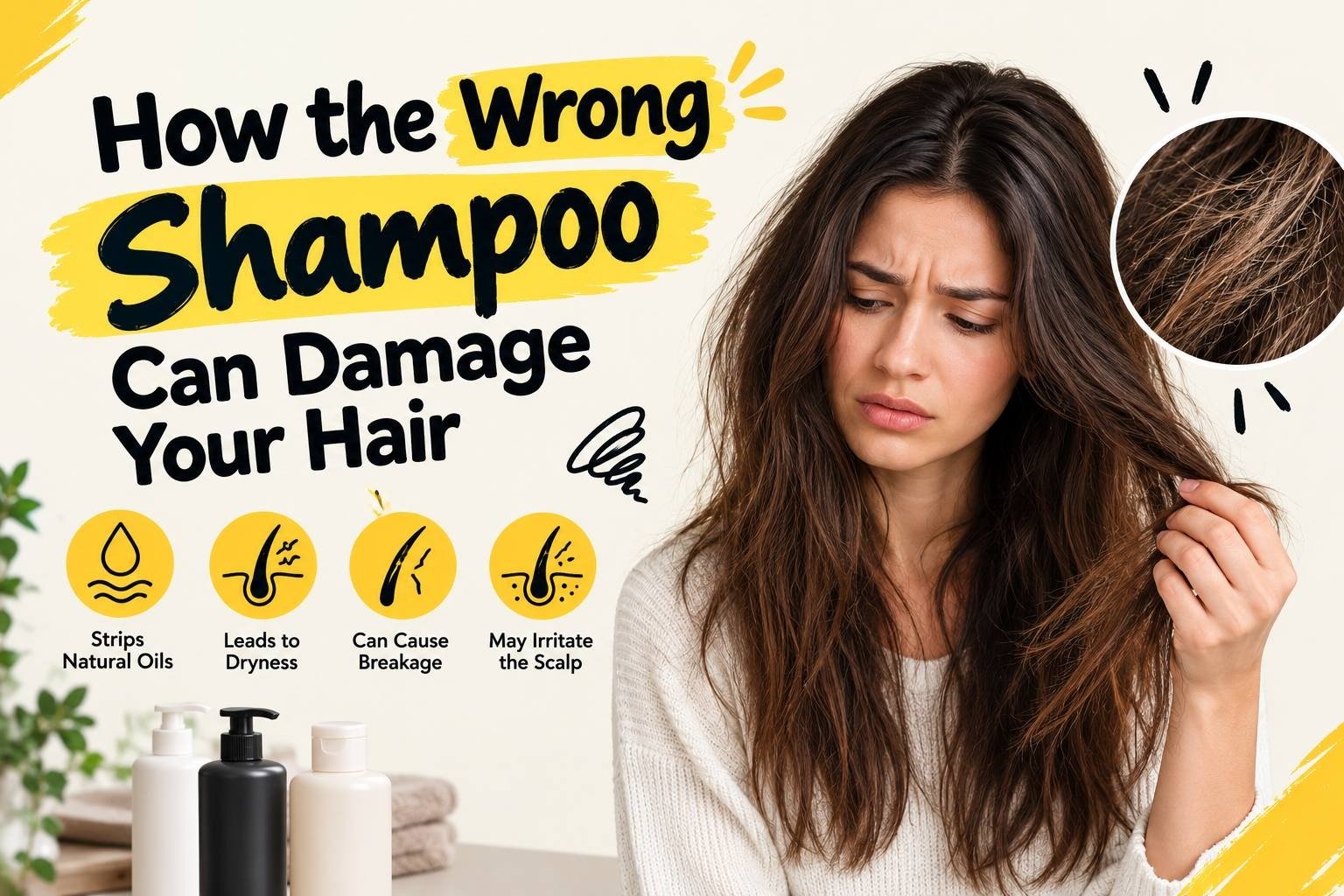
How the Wrong Shampoo Can Damage Your Hair
Key Takeaways
- Some strong cleansers can remove more natural oil than sensitive scalps tolerate, which may leave hair dry or prone to breakage
- Choose a formula that suits your scalp type
- Choose a washing frequency that fits your hair type, scalp condition, and product directions
- Judge a suitable new product over a few weeks, and stop one that causes burning, itching, or other reactions early
Your shampoo affects your hair more than you might expect!
The ingredients in shampoo, and how they suit your scalp, are worth understanding.
The aim of this guide is to help you look past trends like “TikTok Recommended” shampoos and take time to read the product label to better understand what you are putting on your head and how it can affect your scalp health.
We are not criticizing anyone. We just want to let you know what shampoo is good for you, signs that a product may not suit you, and how you can take care of your scalp to avoid or reduce dryness, scalp irritation, dandruff, and other scalp-related issues. So, read from start to end.
Why Shampoo Gets Overlooked
Many people think of shampoo as simply soap for hair, and that assumption can lead them to overlook how a product affects the scalp.
Other minor factors collectively influence the decision too. Like the price tag, scent, bottle size, etc.
A larger bottle may contain more shampoo but can cost more in the long run. Additionally, the wrong shampoo does not just show side effects quickly. That is the reason why most folks often ignore common early-stage symptoms so easily, like:
- Dry, straw-like hair
- Split ends
- Itchy scalp
- Minor flaking
And even if they come to care about those symptoms, they are often found blaming weather, stress, or pillows instead of the product. Some advice on forums and social platforms has no medical backing, and people may trust it without checking.
Noticing a side effect is only the first step, and acting on it early can keep a small irritation from lingering.
Why Shampoo Matters More Than You Think
Our internal body mechanism is so well-designed that it can take care of our scalp health to some extent, unless we invite problems from outside. Take the example of sebum, which is naturally produced in our body and protects the scalp and hair shaft.
Some shampoos contain strong cleansers, including sulfates, that can irritate a sensitive scalp in some people. Strong cleansers can also remove more of that natural layer than some scalps can spare. Irritation can cause an itchy scalp, and scratching it can add to the discomfort, especially on a sensitive scalp, so it is best to address the cause early.
So, what you put on your scalp becomes significantly important.
A tight, squeaky, or itchy scalp a few hours after washing can be a sign that a product does not suit you.
Harsh Ingredients
Sulfates are the ingredients that make shampoo foam up.
Folks consider heavier foam a sign of a better cleaning agent. But that is not always true.
Foam comes from the cleanser doing its job, and strong cleansers can also strip too much oil from the scalp.
Luckily, if you are among the ones with a stronger scalp, that may not bother you. For sensitive scalps, the same product may leave the skin irritated, and some people also notice dryness or breakage.
Heavy fragrance can irritate sensitive skin. If you notice irritation after washing, it is worth checking the label rather than putting up with it.
Signs to Look For
Don’t ignore early signs, since they are often the easiest point to act on. Each of the following points to a different concern, so read them as separate issues:
- Scalp irritation: a tight feeling right after washing, even when you use conditioner.
- Flakes dropping over your shoulder, which points to dandruff or scalp irritation.
- Hair breakage: hair snapping or splitting along the strand.
- Scalp irritation: redness or soreness around the hairline.
If several of these show up together, it is reasonable to review your shampoo. Hair loss is a separate concern. Shedding from the root is different from breakage, and persistent loss should be checked by a doctor.
It’s Important to Distinguish Dandruff From Dry Skin
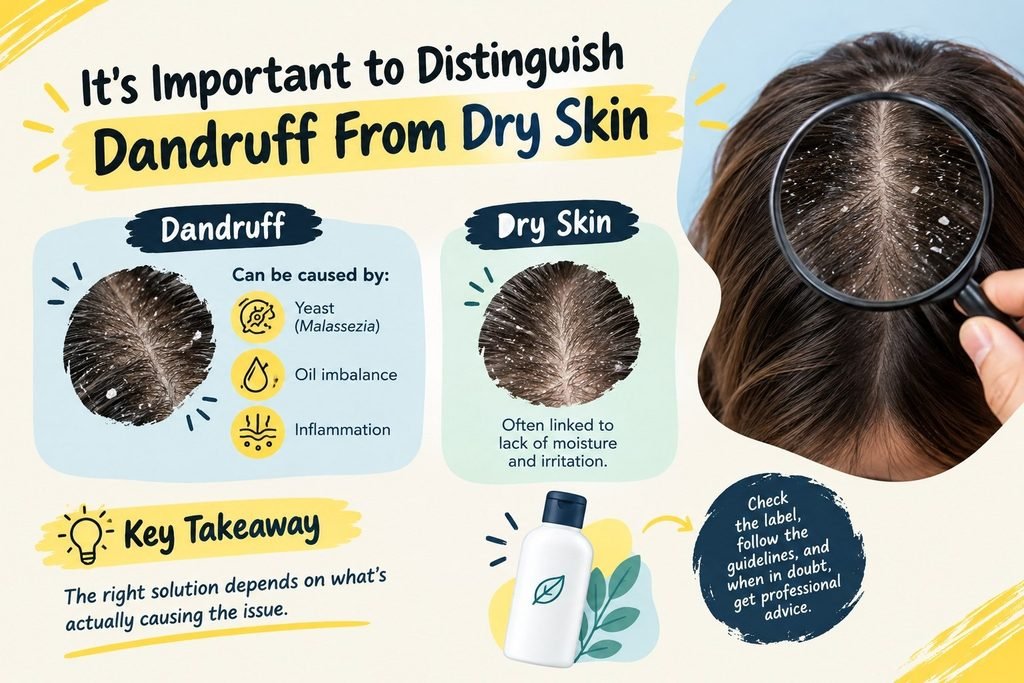
Heavy creams and oils can build up on the scalp and make flakes look worse. Dandruff can come from several causes:
- Yeast (Malassezia).
- An oil imbalance.
- Inflammation.
So the right fix depends on what is actually going on.
Happy Cappy Medicated Shampoo & Body Wash is a fragrance-free formula with 0.95% zinc pyrithione, which the label describes for relief of symptoms associated with dandruff and seborrheic dermatitis. But it can only work as expected, or at its true potential, if you check the label and follow the exact guidelines.
How often to wash depends mainly on hair type and scalp condition. Some people benefit from shampooing daily, while others do better washing less often. Follow the label directions for any medicated shampoo, or the advice of a clinician.
Still, it can be better to consult with a professional for personalized usage guidance depending on your existing scalp condition.
Things to Do That Can Have a Bigger Impact
A simple checklist can save your budget and your scalp health.
- Start by reading the ingredient list instead of choosing by scent or packaging. That’s a no-compromise point.
- Use lukewarm water instead of hot, since hot water can dry out the scalp.
- If you deal with flare-ups, you can alternate a gentle daily cleanser with a medicated shampoo during those weeks.
- Be gentle with your hair too.
- Use your fingertips instead of your nails when you wash.
- Pat your hair dry instead of rubbing it with a towel.
And most importantly in this case, write down the date, the product you used, and how your scalp felt the next day. After a few weeks, you will start to notice patterns you would have missed otherwise.
What to Expect Over Time
Recovery usually takes several weeks, and sometimes longer, so be patient. That patience applies to a product that suits your scalp. Burning, itching, or other adverse reactions are a reason to stop that product, not to keep using it while you wait.
Improvement can come from several factors combined. No single product works for everyone, so what worked for a friend may not work for you.
Keep it simple. Notice how your scalp feels, check the labels, and wash only when you need to. If you see sores, bleeding, hair loss, or flaking that does not go away, see a doctor.
Gentle, consistent care will do more for your hair than any flashy packaging.
Take your time to read more useful guides from our website.